



 Services
  Technologies
  About
About Success



In an effort to increase system stability, developer productivity, and cost effectiveness, IT and DevOps teams have undergone two major shifts in recent years. The first was the move from on-premises infrastructure to the cloud. This shift allows companies to remove a significant amount of overhead in managing their technologies while scaling capacity up or […]
Category Archives: Data and analytics

30
Sep
Sep
A recent Tech Research Asia study found that on average, “network problems” lead to 71 hours of productivity loss. This stat struck a chord with me as it helps to quantify a common problem the Cato team works with customers to solve: reducing WAN latency. With the growing popularity of cloud services like Unified Communications-as-a-Service (UCaaS) and the surge […]

08
Sep
Sep
As DevOps culture and the public cloud have become widely adopted, engineering teams in many companies have become faster and more agile than ever before. However, this very autonomy and agility that teams now enjoy also demand a bigger role in operational security. As such, DevSecOps and Cloud Native Security are essential topics that need to be addressed to […]

06
Sep
Sep
Ever since Amazon Web Services launched Spot instances in 2009, it has been gaining traction among startups wanting to save money running their workloads in the cloud. In recent years, we are seeing increased adoption among enterprise customers wanting to take advantage of the cost savings offered by Spot instances. While enterprises see Spot instances […]
03
Sep
Sep
Introduction As a leading purveyor of excess hyperscaler capacity, Spotinst has years of experience in algorithmically maintaining cost-oriented clusters for production workloads. In December 2018, it launched Ocean, a serverless container engine to help customers get started with Kubernetes, using sensible defaults and enabling ‘nodeless’ operation with autoscaling at the pod level. The company’s pay-as-you-save […]

16
Aug
Aug
Whenever we discuss cloud adoption with enterprise companies curious about making the move, one of the first questions is, which is better: public cloud or private cloud? Cloud adopters want to know which approach is most likely to give them better performance, greater flexibility, stronger security, and lowest cost to operate. While these are important […]

13
Aug
Aug
For any business to operate efficiently, it is essential to ensure that application uptime and performance are optimized. However, along the way to achieving these goals, organizations tend to neglect security. Even when companies are using managed services for their computing infrastructure, they tend to focus on SLAs for the incidents, service requests, and […]
31
Jul
Jul
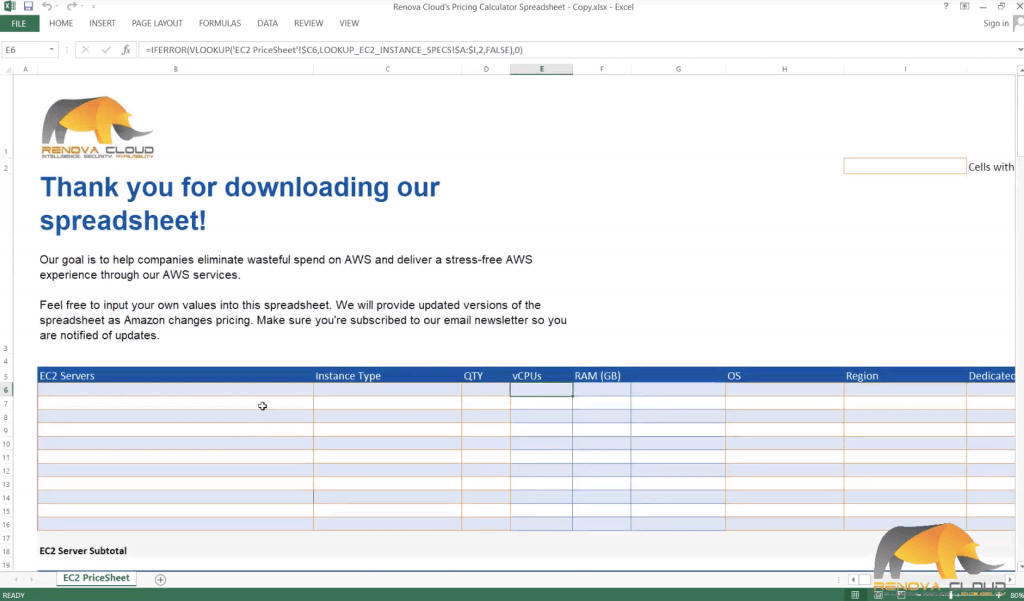
Start learning now how to Model, forecast and Optimize your AWS spend with our video tutorial Video Tutorial: https://www.youtube.com/watch?v=z8GYg1M9ym8 Our AWS Pricing Calculator spreadsheet includes data on all on-demand Amazon EC2 and RDS pricing, as well as all Reserved Instances pricing information. You can Use the spreadsheet to: Map individual servers to calculate AWS pricing information Run […]
23
Jul
Jul
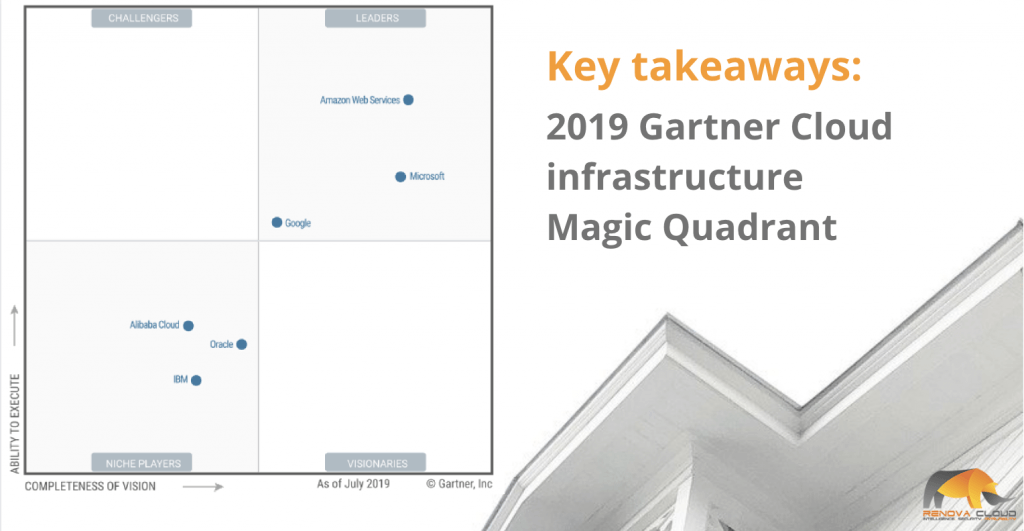
Gartner’s ranking of IaaS providers didn’t change much from 2018, but there are some nuances worth noting as Google Cloud closes some gaps on Microsoft Azure and AWS. On the surface, Gartner’s Magic Quadrant for IaaS looks about the same as the 2018 version when the research firm put Google Cloud in the leader quadrant and cut the field […]
18
Jul
Jul
Embracing Microservices to Drive Rapid Development and Experimentation Learning a new language is traditionally a time-consuming and challenging experience. Duolingo’s mission is to put technology to use and fundamentally change the way individuals learn new languages. Hundreds of millions of people around the world have embraced Duolingo’s unique approach to language education through Duolingo’s web and […]