
 Services
  Technologies
  Company
  Case
Case 



How to Get AWS Cloud Practitioner Certification
Share article


Table of Contents
Cloud computing is growing faster every year. Companies all over the world are moving their data and applications to the cloud to save money and move faster. Because of this shift, there is a high demand for people who understand how the cloud works.
If you want to start a career in this field, the AWS Certified Cloud Practitioner exam is the best place to begin. It proves you understand the basics of the Amazon Web Services platform. This article guides you through everything you need to know to pass the exam and get certified.
What is the AWS Cloud Practitioner Certification?
The AWS Certified Cloud Practitioner is an entry level certification offered by Amazon Web Services. It validates your understanding of cloud fundamentals and the AWS ecosystem rather than hands on engineering skills.

It is designed for anyone who wants to validate their overall understanding of the AWS Cloud platform. You do not need to be a developer or a systems administrator to take this exam. It is actually very popular among sales people, managers, and marketing professionals who work in tech.
The primary goal of this test is to verify that you understand the AWS Cloud at a high level. It focuses on general knowledge rather than deep technical skills. You will not need to write code or configure complex servers during the exam. Instead, you need to know what the different services are and when to use them.
The exam covers four main areas or domains.
- Cloud Concepts
- Security and Compliance
- Cloud Technology and Services
- Billing, Pricing, and Support
Understanding these four pillars is the foundation of your success. The exam questions will ask you to identify the right service for a specific scenario or to explain the benefits of the cloud compared to traditional on-premise data centers.
Holding this certification shows employers that you speak the language of the cloud. It proves you can participate in conversations about technical solutions and understand the business value of using AWS.
Know What You Are Signing Up For
The current AWS Certified Cloud Practitioner exam code is CLF-C02.
Here is the exam snapshot from AWS:
- Exam duration is 90 minutes
- Exam format is 65 questions with multiple choice and multiple response
- The score range is from 100 to 1000. You need a score of 700 to pass.
- Exam cost is 100 USD
- You can test at a Pearson VUE center or take an online proctored exam
- Certification validity is 3 years
If you fail, AWS requires a 14-day wait before a retake, and you pay the full fee again.
Who Should Take This Exam

Many people think AWS certifications are only for IT professionals.
That is not true for the Cloud Practitioner. This certification is excellent for anyone working in a business that uses the cloud.
Sales and marketing teams benefit because it helps them speak the same language as their technical colleagues and customers. Project managers find it helpful because it allows them to understand the scope and requirements of cloud projects better. Executives and business leaders take it to make better decisions about IT costs and strategy.
Of course, if you are an aspiring IT professional, this is your first step. It lays the groundwork before you move on to more advanced certifications like the Solutions Architect Associate.
How to Get AWS Cloud Practitioner Certification
To help you organize your time and efforts, we have broken down the preparation process into four clear stages. Following this roadmap will ensure you cover all the necessary material without getting overwhelmed.
Step 1: Review the Official Exam Guide
Your first task is to download the official exam guide from the AWS website. This document is the blueprint for the entire test. It tells you exactly what will be on the exam and what will not be on it.

Read through the domain list carefully. The guide breaks down the percentage of questions that will come from each domain. For example, Cloud Technology and Services usually makes up the largest chunk of the exam. Knowing this helps you prioritize your study time. If you spend all your time on billing but ignore security, you might struggle to pass.
The guide also lists the specific services you need to know. AWS has over 200 services, but you do not need to memorize all of them for this exam. The guide limits the scope to the most common ones like EC2, S3, RDS, and Lambda. Stick to the services listed in the guide to avoid wasting time on topics that will not appear on the test.
Step 2: Choose Your Study Materials
There are many ways to prepare for this certification. You can choose between free resources provided by AWS or paid courses from third-party instructors. Both paths can lead to success, so it depends on your learning style.
Free Resources from AWS
AWS provides a free digital training course called AWS Cloud Practitioner Essentials. This is a series of videos and quizzes available on the AWS Skill Builder site. It covers all the necessary topics and is taught by AWS experts. It is a fantastic starting point and costs you nothing.
Whitepapers
AWS recommends reading specific whitepapers. These are PDF documents that explain technical concepts in detail. The most important ones for this exam are:
- Overview of Amazon Web Services
- How AWS Pricing Works
- Shared Responsibility Model
You should read these multiple times. The exam writers often pull questions directly from the information in these documents.
Third Party Courses
If you prefer a more structured classroom feel, you might look at platforms like Udemy or Coursera. Instructors there often provide slides and more detailed explanations that can help if you find the official documentation too dry. Look for courses that include practice questions as these are very helpful.
Step 3: Get Hands On Experience
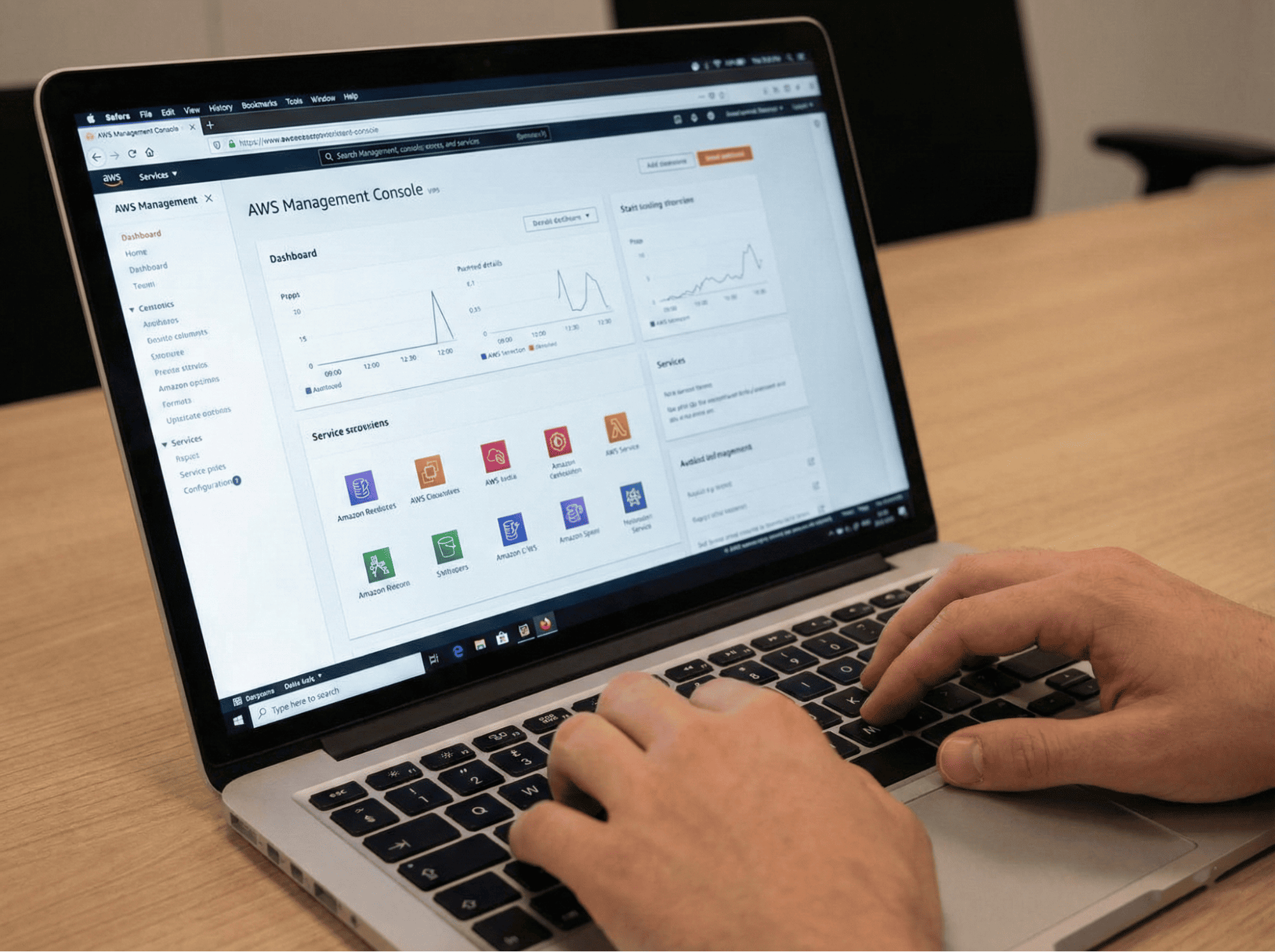
You can pass the exam by just reading and watching videos, but it is much harder. Using the services yourself makes the concepts stick in your memory.
AWS offers a Free Tier for new accounts. This allows you to use many services for free up to certain limits for one year. You should create a free account and log in to the AWS Management Console.
Try to do simple tasks.
- Launch a virtual server using EC2.
- Create a storage bucket in S3 and upload a file.
- Set up a billing alarm so you know if you exceed the free limits.
- Create a new user in the IAM (Identity and Access Management) dashboard.
Seeing the buttons and menus helps you visualize the answers during the exam. When a question asks how to secure a user account, you will remember the steps you took in the IAM dashboard.
Step 4: Practice with Mock Exams
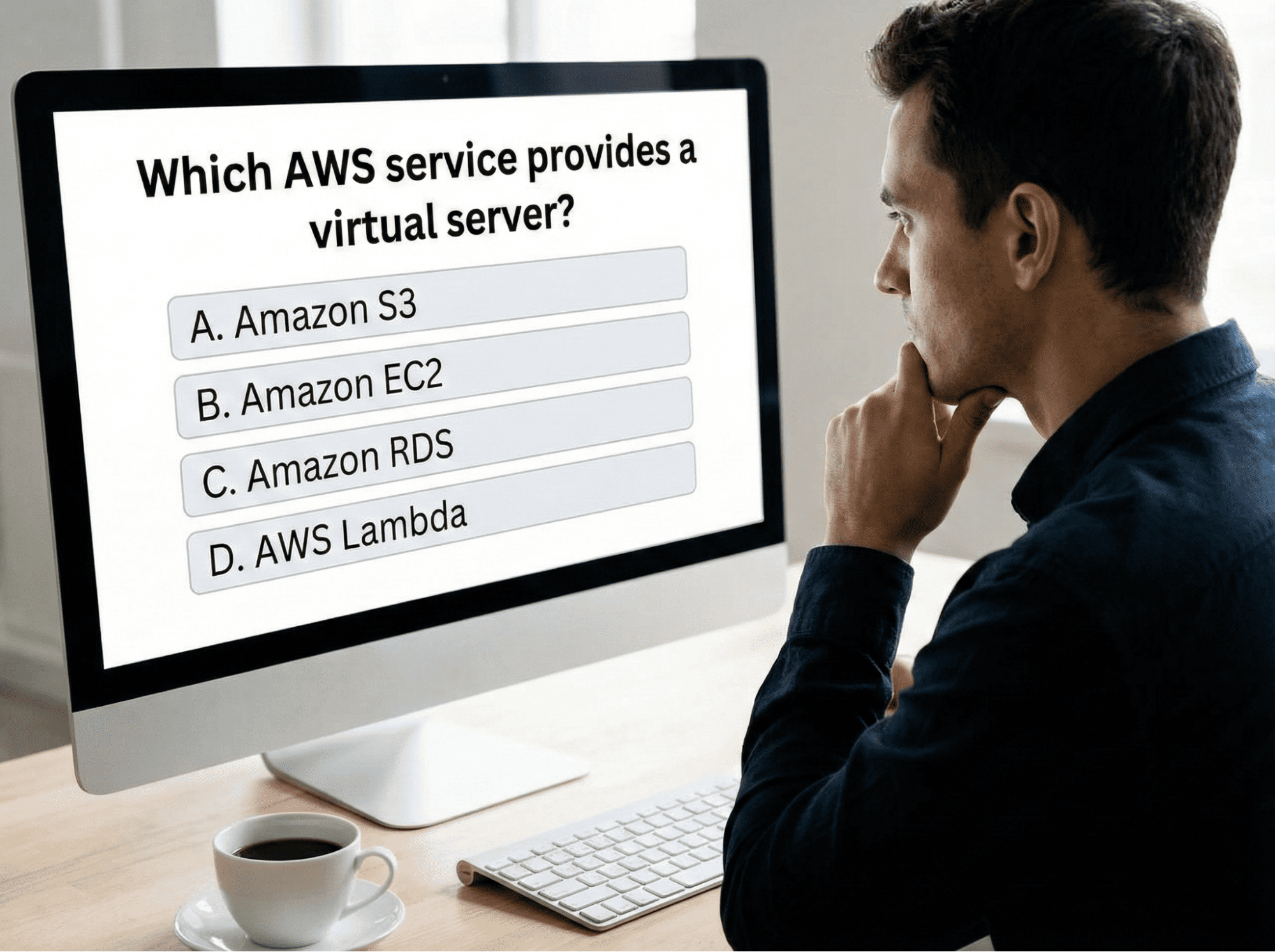
This is the most important step in your preparation. You must take practice tests. Reading about the cloud and answering multiple-choice questions about it are two different skills.
Practice exams help you get used to the wording of the questions. AWS questions can sometimes be tricky. They might offer four answers that all look correct, but you have to choose the best answer. Practice tests train your brain to spot the differences.
When you take a practice exam, do not just look at your score. Go back and review every question you got wrong. Read the explanation for why the correct answer is right and why your answer was wrong. This is where the real learning happens.
You should aim to score consistently above 80 percent on your practice tests before you schedule the real exam. This gives you a safety buffer for exam day nerves.
Deep Dive into the Four Domains
To ensure you are fully prepared, let’s look closer at the four main areas you need to study.
Cloud Concepts This section tests your knowledge of what cloud computing is. You need to understand the difference between Capex (Capital Expenditure) and Opex (Operational Expenditure). You must know the benefits of the cloud, such as high availability, elasticity, agility, and global reach. You should also understand the three main cloud architecture models which are Infrastructure as a Service (IaaS), Platform as a Service (PaaS), and Software as a Service (SaaS).
Security and Compliance Security is the top priority at AWS. You need to understand the Shared Responsibility Model inside and out. This model defines what AWS is responsible for (security of the cloud) and what you are responsible for (security in the cloud). You also need to know basic security services like AWS Shield for DDoS protection, AWS WAF for web filtering, and AWS Inspector for automated security assessments.
Technology This is the technical part. You need to know the core services.
- Compute: Know the difference between EC2 (virtual servers), Lambda (serverless), and ECS (containers).
- Storage: Understand S3 (object storage), EBS (block storage for EC2), and Glacier (archiving).
- Database: Know when to use RDS (SQL) versus DynamoDB (NoSQL).
- Networking: Understand what a VPC is and how load balancers work.
Billing and Pricing You will be asked how AWS charges for services. You do not need to memorize specific dollar amounts, but you need to know the pricing structures. For example, know that S3 charges based on storage amount and data transfer out, while EC2 charges for the time the instance is running. You also need to know the tools available for cost management, like AWS Cost Explorer and AWS Budgets.
Scheduling the Exam
Once you feel confident, it is time to book your test. You can do this through the AWS Training and Certification portal.
You have two options for taking the exam.
- Testing Center: You can go to a physical location run by Pearson VUE.
- Online Proctored: You can take the exam from your home or office.
If you choose the online option, you need a private room and a reliable internet connection. You will be monitored via your webcam the entire time. If you have a noisy house or unstable internet, going to a testing center is a safer choice.
The exam costs 100 USD. If you have passed an AWS exam before, you might have a 50 percent discount voucher in your account. The test consists of 65 questions and you have 90 minutes to complete them. The passing score is 700 out of 1000.
Tips for Exam Day
On the day of the exam, ensure you are well-rested. If you are taking it online, run the system test on your computer 30 minutes before your appointment time to fix any technical issues.
During the test, manage your time well. You have roughly 90 seconds per question. If you get stuck on a hard question, flag it and move on. You can come back to it later if you have time. Do not let one difficult question ruin your rhythm.
Read every question twice. Pay attention to qualifying words like “most cost-effective” or “least operational overhead.” These words change the answer. If the question asks for the most cost-effective storage for data that is rarely accessed, the answer is likely Amazon S3 Glacier, not standard S3.
Why This Certification Matters for Your Career

Earning the AWS Cloud Practitioner certification is a strong signal to employers. It shows you are proactive about your professional development. It demonstrates that you possess the discipline to study for and pass a standardized test.
For non-technical roles, it separates you from the competition. A sales representative who understands cloud architecture can have much deeper conversations with clients than one who does not. A recruiter who knows the difference between Java and JavaScript is good, but one who knows the difference between EC2 and Lambda is even better for hiring tech talent.
For technical roles, it is the entry point to a high-paying career path. Cloud engineers and architects are among the most in-demand jobs in the tech industry. This certification is the first step on the ladder that leads to those roles.
Common Mistakes to Avoid
Many people fail their first attempt because they underestimate the exam. Because it is a “foundational” test, people assume it is easy. While it is not as hard as the Professional level exams, the questions are specific. You cannot guess your way through it.
Another mistake is relying only on “dumps” or questions found on random websites. These are often outdated or have incorrect answers. Stick to reputable practice exams and official AWS documentation.
Finally, do not rush. Take the time to truly understand the concepts. If you memorize the answers without understanding the “why,” you will struggle when you move on to higher-level certifications. The goal is to build a solid foundation of knowledge that will serve you for years.