
 Services
  Technologies
  About
About Success



What Is AWS Direct Connect
Share article


Table of Contents
If your workloads on Amazon Web Services need consistent, high-bandwidth connectivity to your on-premises infrastructure, the public internet is rarely the right path. AWS Direct Connect solves this by giving your network a private, dedicated line directly into AWS — bypassing the internet entirely.
What isAWS Direct Connect
AWS Direct Connect is a dedicated network service that establishes a private physical connection between your on-premises data center, office, or colocation facility and Amazon Web Services.
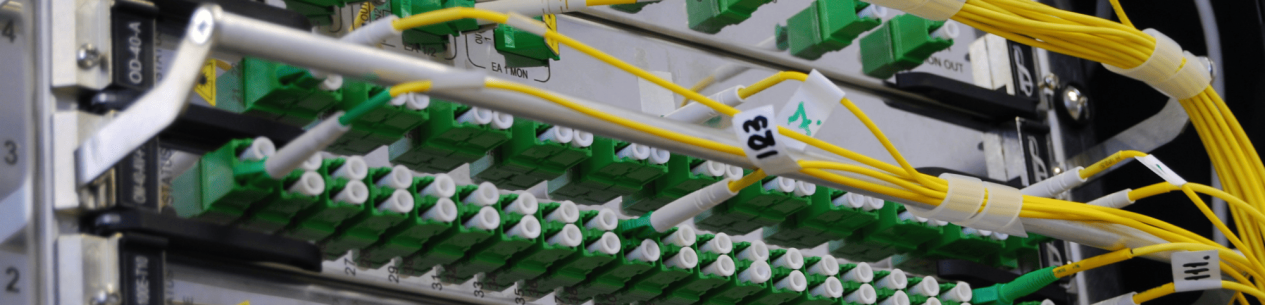
Instead of routing traffic across the public internet, data travels over a fiber-optic Ethernet cable that runs directly between your router and an AWS Direct Connect router at one of Amazon’s connection locations around the world.
Once the physical link is in place, you configure virtual interfaces (VIFs) over that connection to access resources inside your Amazon VPC, public AWS services such as Amazon S3, or even remote sites through the Direct Connect SiteLink feature. The result is a connection that behaves more like a private enterprise network than a cloud link.
Why it matters now: 73% of organizations operate hybrid cloud environments in 2026, making reliable private connectivity between data centers and cloud infrastructure a standard operational requirement rather than a niche concern.
How AWS Direct Connect Works

The connection starts at an AWS Direct Connect location — a colocation facility or data center where AWS has installed its own networking equipment. You, or an AWS Direct Connect Delivery Partner, provision a cross-connect fiber at that location between your network and the AWS router.
Over that single physical connection, you can then create multiple virtual interfaces to separate traffic by purpose. A private virtual interface routes traffic to resources inside your VPC using private IP addresses. A public virtual interface gives you access to public-facing AWS services across all AWS regions. A transit virtual interface connects to an AWS Transit Gateway, letting you reach multiple VPCs from a single connection point.
Dedicated Connections
A dedicated connection gives a single customer their own physical Ethernet port at the Direct Connect location. Available at speeds of 1 Gbps, 10 Gbps, 100 Gbps, and 400 Gbps, this option offers the highest performance and the most control over the connection. Setup typically takes longer than hosted connections because it involves physical provisioning at the colocation site.
Hosted Connections
A hosted connection is provisioned through an AWS Direct Connect Delivery Partner, who shares a pre-established physical link with your organization. Hosted connections are available from 50 Mbps up to 25 Gbps and can be deployed faster than dedicated connections, making them a good fit for teams that want private connectivity without the lead time or cost of a full dedicated port.
The Benefits of Using AWS Direct Connect

Moving your connectivity off the public internet and onto a dedicated private link changes how your infrastructure behaves in four meaningful ways.
Consistent, Predictable Performance
Traffic sent over Direct Connect never touches the public internet. Your data travels across the AWS global network from the Direct Connect location to your target AWS region, which eliminates the latency spikes and packet loss that internet-based connections experience under load. For latency-sensitive workloads — trading platforms, real-time analytics, or large-scale database replication — this predictability is difficult to replicate over a VPN.
Lower Data Transfer Costs at Scale
AWS charges data transfer out fees when traffic exits the AWS network over the internet. Direct Connect uses a separate, lower rate for data transferred out to your on-premises environment. For organizations moving large volumes of data regularly, the difference in transfer costs compounds quickly. Hybrid cloud spending grew 21% year-over-year in 2025, and cost efficiency ranked as the top driver behind hybrid adoption at 62% — making Direct Connect’s transfer pricing an important part of the total cost calculation.
Stronger Security and Compliance Posture
Because Direct Connect traffic flows over a private link rather than the public internet, it is far easier to demonstrate compliance with data residency and privacy regulations such as HIPAA, PCI DSS, and ISO 27001. You retain full control over the network path your data takes, and you can layer your existing on-premises security monitoring and controls across the connection. Many regulated industries — banking, insurance, healthcare — require this level of network isolation before moving production workloads to the cloud.
Higher Bandwidth for Data-Intensive Workloads
Internet connections are subject to bandwidth contention and throttling at peak times. A 100 Gbps dedicated Direct Connect port delivers that throughput reliably regardless of broader internet conditions. Teams running large-scale data migrations, continuous backup and disaster recovery pipelines, or high-volume media processing workflows find that Direct Connect removes the bandwidth ceiling that would otherwise limit throughput.
When Your Business Should Use AWS Direct Connect
Direct Connect is not necessary for every AWS workload. A standard site-to-site VPN over the internet works well for many development environments, low-traffic applications, and use cases where occasional latency variation is acceptable. Direct Connect becomes the right choice in the following scenarios.
Large-Scale Data Migration
Moving terabytes or petabytes of data from on-premises storage to AWS over the internet is slow and expensive. Direct Connect dramatically increases throughput and lowers per-GB transfer costs for bulk migration projects.
Hybrid Applications
Applications where some components run on-premises and others run in AWS need low-latency, reliable connectivity between both environments. Direct Connect provides a stable private path for inter-tier communication.
Regulated Industries
Financial services, healthcare, and government workloads often carry compliance requirements that mandate private network paths. Direct Connect satisfies those requirements while still allowing cloud deployment.
Disaster Recovery
Organizations that replicate production data to AWS for business continuity need consistent bandwidth and low latency to meet recovery point objectives. Direct Connect supports reliable, scheduled replication at scale.
AWS Direct Connect vs Site-to-Site VPN
The most common question teams ask when evaluating Direct Connect is how it compares to an AWS Site-to-Site VPN. Both options connect your on-premises network to AWS, but they differ significantly in performance, cost, and setup complexity.
| Factor | AWS Direct Connect | Site-to-Site VPN |
| Network path | Private fiber, off the public internet | Encrypted tunnel over the public internet |
| Latency | Consistent and low | Variable, dependent on ISP conditions |
| Bandwidth | Up to 400 Gbps per dedicated port | Typically limited to 1.25 Gbps per tunnel |
| Cost | Higher upfront, lower data transfer rates | Lower upfront, standard internet egress rates |
| Setup time | Days to weeks depending on connection type | Hours to a day |
| Best for | Production workloads, compliance, large data volumes | Dev/test environments, backup connections |
Many organizations use both in combination. Direct Connect handles high-volume production traffic while a Site-to-Site VPN provides a failover path or a lower-cost option for non-critical connectivity. AWS supports this architecture natively, and you can configure Amazon CloudWatch to monitor both connections and trigger automatic failover if the Direct Connect link experiences an issue.

Getting Started with AWS Direct Connect
Setting up Direct Connect involves choosing between a dedicated or hosted connection, selecting a Direct Connect location close to your data center, working with a colocation provider or AWS Delivery Partner to complete the cross-connect, and then configuring virtual interfaces for your VPCs and services. For most enterprise teams, working with a certified AWS partner who has experience provisioning Direct Connect in your region significantly reduces the setup time and the risk of misconfiguration.
By 2027, 90% of organizations are expected to operate a hybrid cloud model, which means private, reliable cloud connectivity is fast becoming a baseline infrastructure requirement. Getting the networking layer right from the start makes every subsequent cloud workload easier to build and operate.
Set Up AWS Direct Connect with Renova Cloud
Renova Cloud is an AWS Premier Partner based in Vietnam, with certified engineers who have deployed AWS Direct Connect across enterprise and regulated-industry environments throughout Southeast Asia.
We handle everything from Direct Connect location selection and partner coordination to VIF configuration, monitoring setup with CloudWatch, and ongoing connection management as part of our managed cloud services.
If your organization is planning a hybrid cloud architecture, a large-scale migration, or needs private connectivity to meet compliance requirements, our team is ready to help you get connected quickly and correctly.